
OxygenOS
OxygenOS 13 F.48 Update Rolling Out for OnePlus Nord CE 2 in India

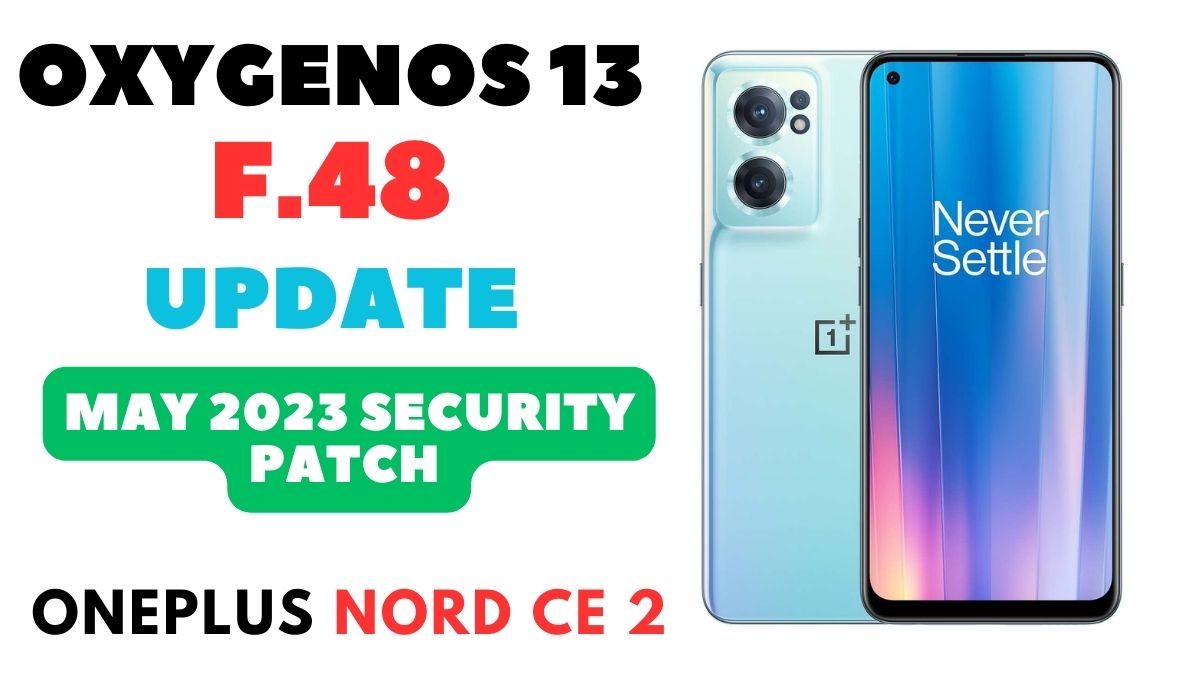
OnePlus has begun the incremental rollout of OxygenOS 13 F.48 for the OnePlus Nord CE 2, catering specifically to users in India. The update, which integrates the May 2023 Android security patch, brings several improvements and bug fixes to enhance the device’s performance and user experience.
The software update, bearing the version number IN IV2201_11.F.48, focuses on enhancing system security and stability. OnePlus has incorporated the latest Android security patch, offering users increased protection against potential threats and vulnerabilities. By keeping the operating system up-to-date, OnePlus ensures that users can continue to enjoy a secure and reliable smartphone experience.
Furthermore, OxygenOS 13 F.48 brings improvements to the background display effect of Quick Settings. This enhancement will enhance the visual experience for users when accessing and interacting with the Quick Settings menu on their OnePlus Nord CE 2 devices.
Among the notable fixes in this update is the resolution of an issue that previously affected the screen brightness control within Quick Settings. With this fix, users can now conveniently adjust their screen brightness using the Quick Settings panel without any glitches or irregularities.
As is customary with OnePlus OTA updates, the release will follow an incremental rollout approach. Initially, a small percentage of OnePlus Nord CE 2 users in India will receive the update today. OnePlus will closely monitor the rollout progress and will gradually expand its availability to a broader user base over the next few days. Users are encouraged to be patient if they have not yet received the update, as it will reach them in due course.
To check for the update manually, users can navigate to the Settings menu on their OnePlus Nord CE 2 devices, then select System > System Updates. If the update is available, users can download and install it to enjoy the latest features, improvements, and bug fixes provided by OxygenOS 13 F.48.
Please note that the OxygenOS 13 F.48 update is specifically intended for OnePlus Nord CE 2 users in India and may not be applicable to devices in other regions.
Here is the OxygenOS 13 F.48 Changelog for OnePlus Nord CE 2:
System
- Integrates the May 2023 Android security patch to enhance system security.
- Improves system stability.
- Improves the background display effect of Quick Settings.
- Fixes an issue that affects the screen brightness control in Quick Settings.
How to update OnePlus Nord CE to OxygenOS 13 F.48:
To update your OnePlus Nord CE 2 device to the latest OxygenOS 13 F.48 software version, you can follow these steps:
- Ensure your device has sufficient battery or is connected to a power source.
- Connect to a stable Wi-Fi network.
- Go to Settings.
- Tap on “System” and then “System Updates.”
- Check for updates.
- Download the update and ensure a stable internet connection.
- Install the update.
- Your device will restart, and you can enjoy the new features.
Note: Updates are rolled out gradually, so be patient if the update is not immediately available. Backup your data before updating.
Download OxygenOS 13 F.48 update for OnePlus Nord CE 2
- IN IV2201_11.F.48 – Incremental
The download link will be added once available.
If you like our article, follow us on Google News and Instagram, or join our Telegram Group.
For More Such Updates Follow Us On – Telegram, Twitter, Google News, WhatsApp and Facebook











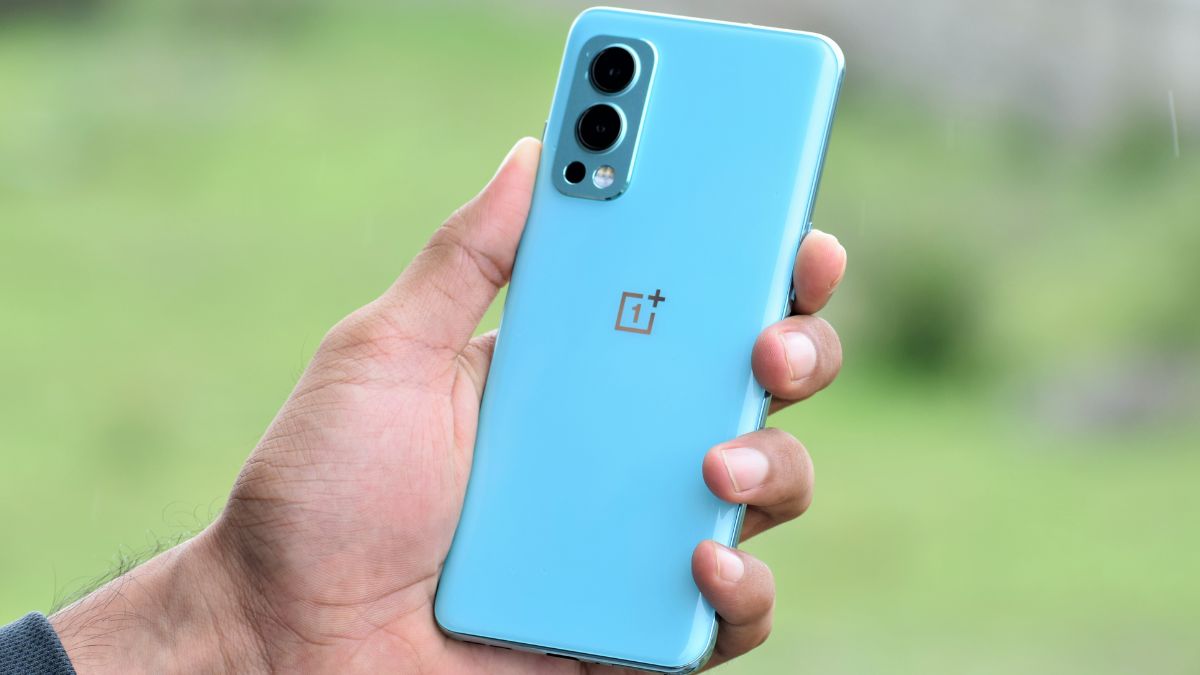
OnePlus, a Chinese Tech Giant has started rolling out the OxygenOS 13 F.50 update for the OnePlus Nord 2 5G in India. This update is based on the January 2024 security patch. As like the previous F.49 update, this new F.50 is also based on OxygenOS 13 which is based on Android 13.
If we talk about the build number. So, the build number of the update is identified as OxygenOS 13 DN2101_11_F.49. Also, the size of the update is 323.46 MB.
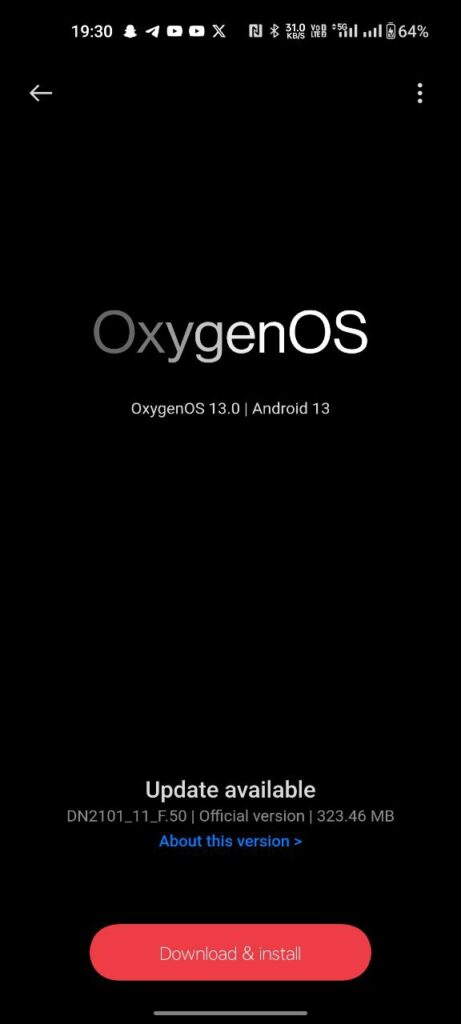
Also, the changelog for this update is listed below:
System
- Integrates the January 2024 Android security patch to enhance system security.
- The Background Stream feature in the Smart Sidebar has been removed.
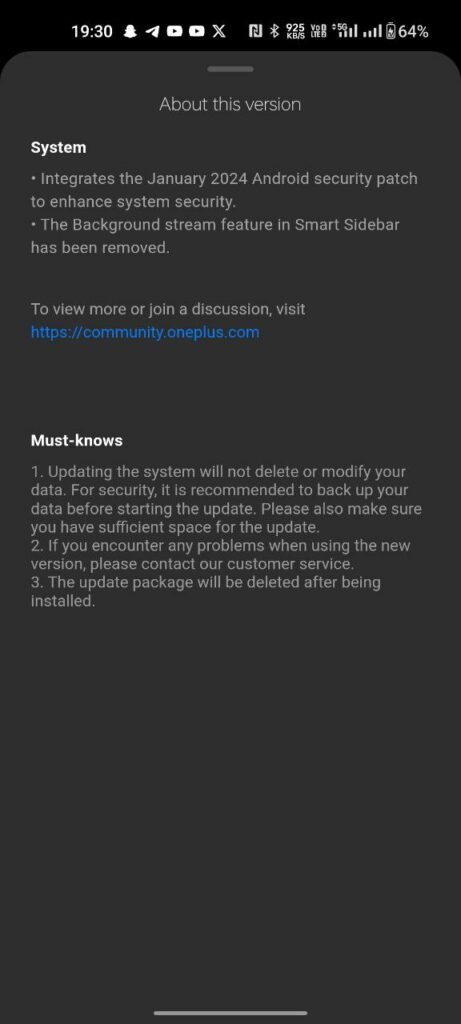
With this new F.50 update, OnePlus has removed the background stream feature from the Smart Sidebar. As you can see clearly in the above image the update size is 323.46 MB which is less. So, don’t expect many changes or add-ons. This update only improves the system stability and performance with the new January 2024 security patch.
Note: If you want to know why Background Stream was removed from the Smart Sidebar, then check out this.
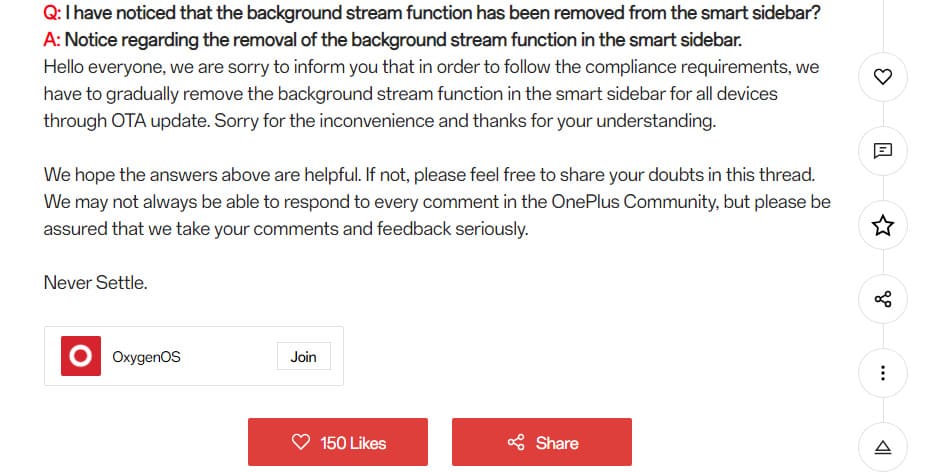
How to Update?
To update your OnePlus Nord 2 5G to OxygenOS 13 F.49. Whenever you get the update notification, click on it. You can also check manually by going into Settings> About Device> Click on Blue Color OxygenOS Box. Click On Download and then, click on Install.
Note: You have to make sure that your device is sufficiently charged, i.e. 50% of its storage, before installing the update.
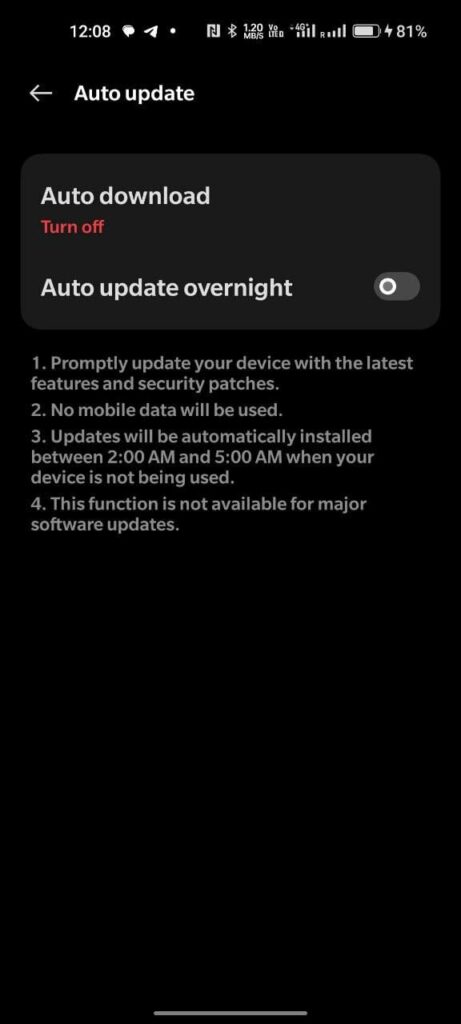
Also, if you don’t want to update your phone after downgrading. Then do keep in mind to change Auto Update to Turn Off and also toggle off the Overnight option.
For More Such Updates Follow Us On – Telegram, Twitter, Google News, WhatsApp and Facebook
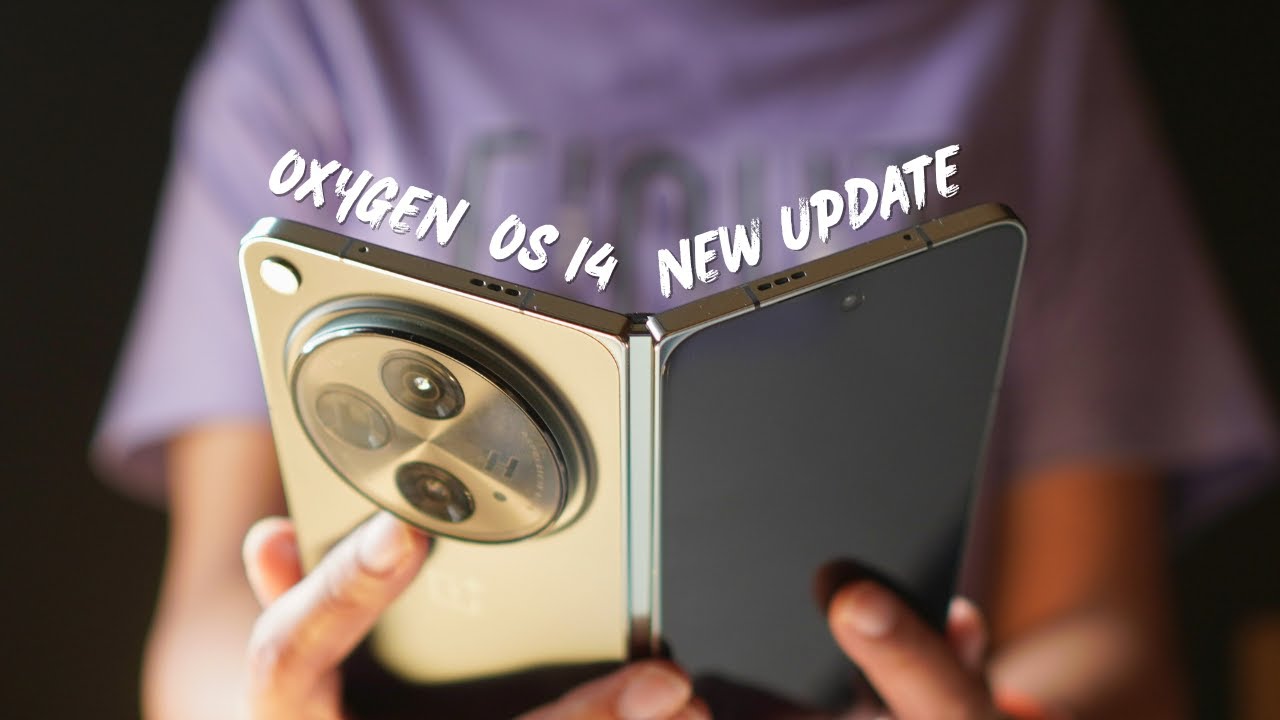
After beta builds, OnePlus has started rolling out stable OxygenOS 14 based on the Android 14 update for its foldable phone, i.e. OnePlus Open. The stable update is first given to those OnePlus Open owners who have participated in Open or Closed Beta versions, and after that, it will be available for all OnePlus Open users. If we talk about the changelog and
What are the changes and new add-ons to this update?
First, let’s talk about the build version. So, the build number of this update is identified as CPH2551_14.0.0.400(EX01). The changelog for this update is listed below:
Changelog:
- Adds Aqua Dynamics, a way of interaction with morphing forms that allows you to view up-to-date information at a glance.
Smart efficiency
- Adds File Dock, where you can drag and drop to transfer content between apps and devices.
- Adds Content Extraction, a feature that can recognize and extract text and images from the screen with one tap.
- Adds Smart Cutout, a feature that can separate multiple subjects in a photo from the background for copying or sharing.
Cross-device connectivity
- Improves Shelf by adding more widget recommendations.
Security and privacy
- Improves photo and video-related permission management for safer access by apps.
Performance optimization
- Improves system stability, the launch speed of apps, and the smoothness of animations.
Aquamorphic Design
- Upgrades Aquamorphic Design with a natural, gentle, and clearer color style for a more comfortable color experience.
- Adds Aquamorphic-themed ringtones and revamps the system notification sounds.
- Improves system animations by making them even smoother.
User Care
- Adds a carbon tracking AOD that visualizes the carbon emissions you avoid by walking instead of driving.
How to Update?
To update your OnePlus Open, first, you have to Open Settings > About Device > Click on Blue Colored OxygenOS Version Box > Click on Download.
If you have not received the OxygenOS 14 stable update on your OnePlus Open, and you want to update it instantly, then check that your phone is running on the CPH2551_13.2.0.301 version. If you are on this version, then Go to Settings > About device > tap up to date > tap icon on the top right > beta program > follow the steps to apply > check for updates.
Note: This will only work for the Indian (IN) users.
Have you got the OxygenOS 14 stable update on your OnePlus Open? Do let us know in the comment box. Also, tell us whether you like this post or not.
Note: Before updating your phone, do keep in mind that your phone must be charged above 30%. Also, do remember that at least 5GB of space must be available on your phone for this update.
How to Rollback OnePlus Open from OxygenOS 14 to OxygenOS 13?
If you want to roll back to OxygenOS 13, then first you have to download the rollback/downgrade file by clicking here.
After downloading the rollback/downgrade, you have to enable the developer option by going into Settings > About device > Version > Click Build number 7 times and enter the password; now you are in developer mode.
Then, to do a local update, Go back to Settings > About device > Up to date > Click the top right button > Local install > Click on the corresponding rollback package > Extract > Upgrade > System upgrade completed to 100%.
For More Such Updates Follow Us On – Telegram, Twitter, Google News, WhatsApp and Facebook
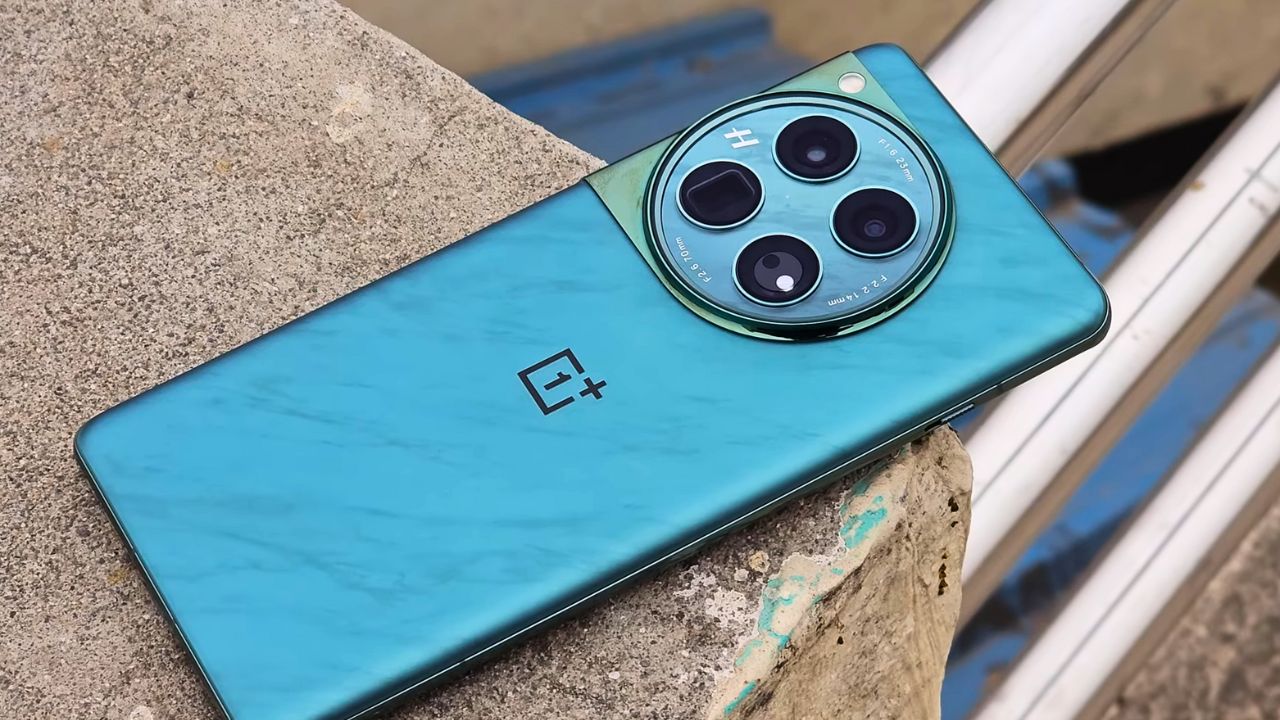
The OnePlus 12, the latest flagship smartphone from the OnePlus company has just received its first major update since launch. This update brings improvements and new features to enhance the overall user experience of the device. It also integrates the January 2024 Android security patch for better system security.
This update can be identified for the OnePlus 12 with its firmware version CPH2573_14.0.0.404(EX01) and its size is 1.40 GB. This update will be rolling out it in stages, so it will take some time to reach all the users.
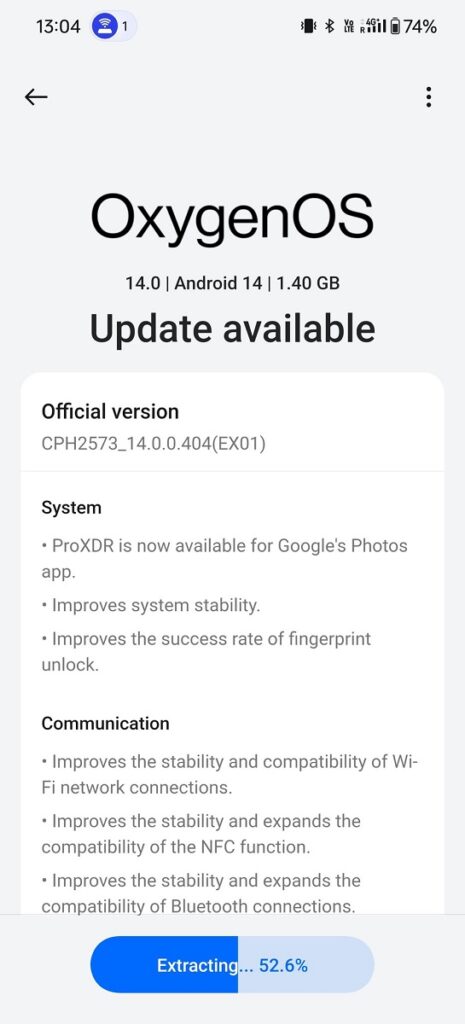
OxygenOS 14.0.0.404 for OnePlus 12
The OxygenOS 14.0.0.404 update for OnePlus 12 brings ProXDR compatibility to the Google Photos app, enhancing the viewing experience with more vivid and dynamic colors. There are improvements in the overall stability of the system, ensuring smoother performance. The success rate of the fingerprint unlock feature has been improved, offering a more reliable and faster unlocking experience.
This update also enhances the stability and compatibility of Wi-Fi connections, ensuring a more consistent and reliable internet experience. The NFC functionality has seen improvements in both stability and compatibility, expanding its range of use. The Bluetooth connectivity has been improved, offering a more stable and broader range of compatibility with devices.
A significant addition to the camera features is the Master mode, which now includes Hasselblad color tuning. This mode is designed to enhance photos with more natural and vibrant colors, bringing professional-grade color accuracy and quality to everyday photography.
Changelog:
System
- ProXDR is now available for Google’s Photos app.
- Improve system stability.
- Improves the success rate of fingerprint unlock.
Communication
- Improves the stability and compatibility of Wi-Fi network connections.
- Improves the stability and expands the compatibility of the NFC function.
- Improves the stability and expands the compatibility of Bluetooth connections.
Camera
- Adds Master mode that features Hasselblad color tuning to enhance your photos with more natural and vibrant colors.
For More Such Updates Follow Us On – Telegram, Twitter, Google News, WhatsApp and Facebook