
Updates
Samsung Continues Rollout of June 2023 One UI Updates for Galaxy Devices

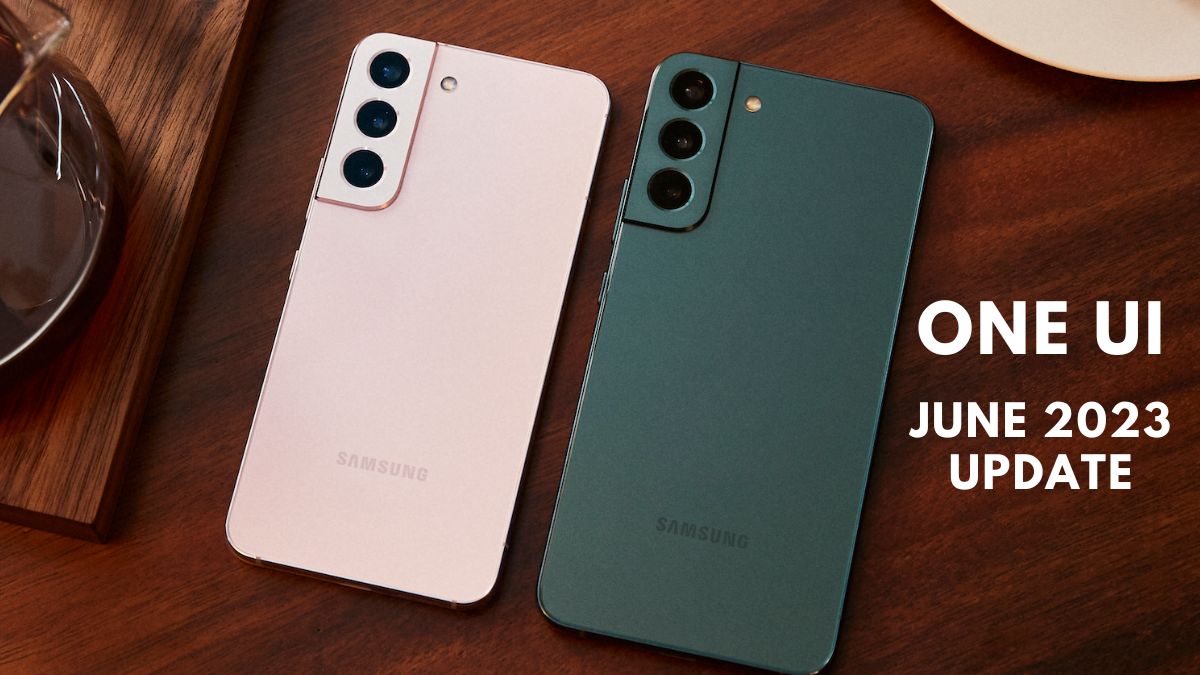
Samsung, the renowned tech giant, is making strides in improving the security and functionality of its Galaxy devices by rolling out the latest One UI Security Maintenance Release through software updates. On June 5, the company published the details of the One UI patch, providing users with a comprehensive list of the included content in the software package.
One UI June 2023 Update
Coinciding with Samsung’s update, Google released the Android security bulletin for June 2023. This bulletin is of particular importance for Galaxy devices as Android serves as the foundation for the One UI experience, driving each functional operation. The June 2023 patch from Samsung plays a crucial role in enhancing the overall security of Galaxy devices.
One of the most anticipated updates this month is the release of the third Beta software of Android 14 by the US tech giant. This new version of the operating system is expected to bring significant changes, including user interface tweaks, lock screen customization options, as well as improvements in performance and system stability.
One UI 6 Beta Program
As for the One UI 6 Beta program, it is not expected to commence in June 2023. Last year, the One UI 5 Beta started in early August, but there are indications that this year’s program may have an earlier debut, possibly in mid-July. The Galaxy S23 series will likely be the first to experience the One UI 6 Beta in seven select markets.
Samsung to Launch its New Flagship Devices to Market
Looking ahead to July 2023, Samsung is gearing up for an exciting lineup of new releases. Late in July, the company is expected to launch the highly anticipated Galaxy Z Fold 5 and Galaxy Z Flip 5 smartphones. Additionally, the Galaxy Tab S9 flagship tablets and the Galaxy Watch 6 and Watch 6 Classic are also expected to make their debut. July promises to be a month packed with Samsung and One UI innovations.
These Samsung Devices Getting June 2023 Update
In the latest software update rollouts, Samsung has started deploying the June 2023 update to various devices. The Galaxy A53, Galaxy S20 series, Galaxy Z Flip 4, and Galaxy A12 Nacho are among the devices that have already received the update. Furthermore, the Galaxy S22 series, Galaxy Tab Active 3, Galaxy A52, and Galaxy A23 devices have been updated with the June 2023 Android patches.
Samsung’s powerful mid-ranger, the Galaxy A52s, has joined the Galaxy Z Fold 4 and Note 20 flagships in receiving the latest June 2023 One UI patch, bolstering its security and performance.
The rollout of the June patch update commenced with the Galaxy Z Fold 4 in the United States, followed by the Galaxy Note 20 and Note 20 Ultra handsets a few hours later.
Here is the list of devices receiving the June 2023 One UI update:
- Galaxy A53
- Galaxy S20 series
- Galaxy Z Flip 4
- Galaxy A12 Nacho
- Galaxy S22 series
- Galaxy Tab Active 3
- Galaxy A52
- Galaxy A23
- Galaxy A52s
- Galaxy Z Fold 4
- Galaxy Note 20
- Galaxy Note 20 Ultra
Samsung remains committed to providing users with enhanced security and improved functionality through regular software updates. Galaxy users can look forward to the continued advancements brought by the One UI updates, ensuring a seamless and secure mobile experience.
For More Such Updates Follow Us On – Telegram, Twitter, Google News, WhatsApp and Facebook















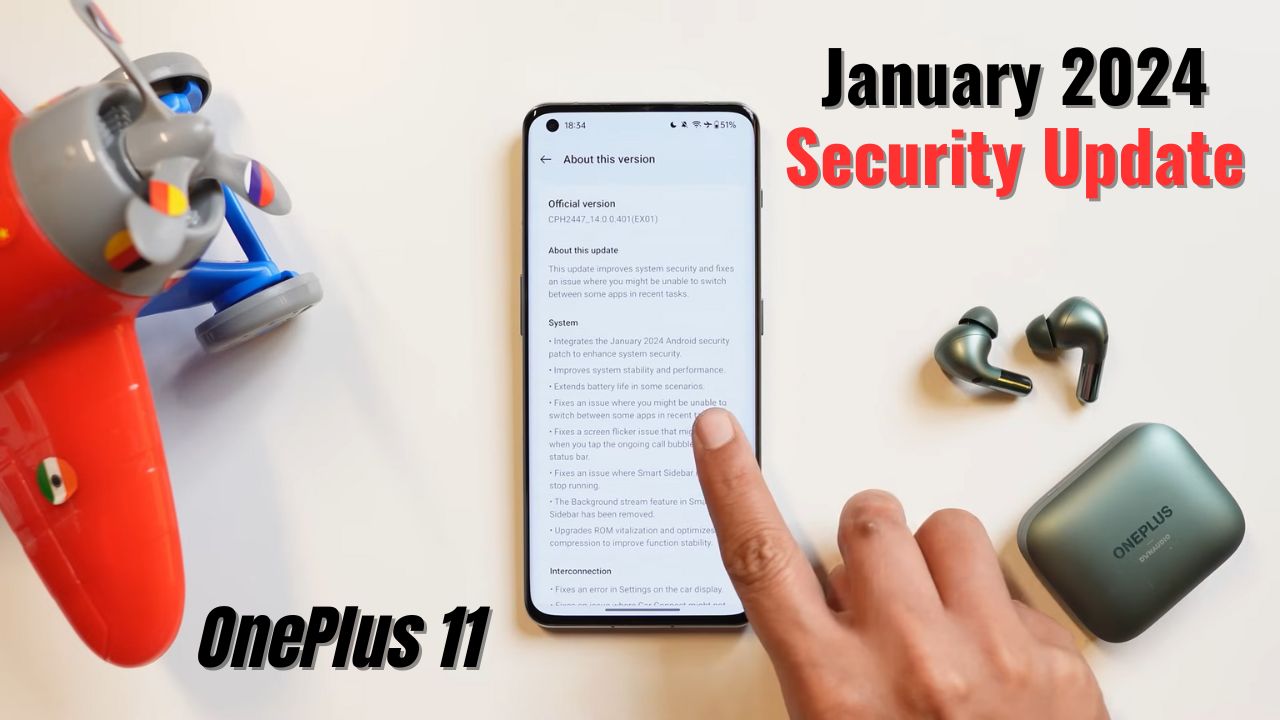
The OnePlus 11 was one of the first devices to grab the January 2024 security patch in the OnePlus group. The update has arrived with many fixes related to battery life improvements, stability, and performance improvements, and it also comes with an upgraded Rom vitalization option.
As mentioned, the new update came with the new and updated January 2024 security patch and improved the device’s stability and performance.
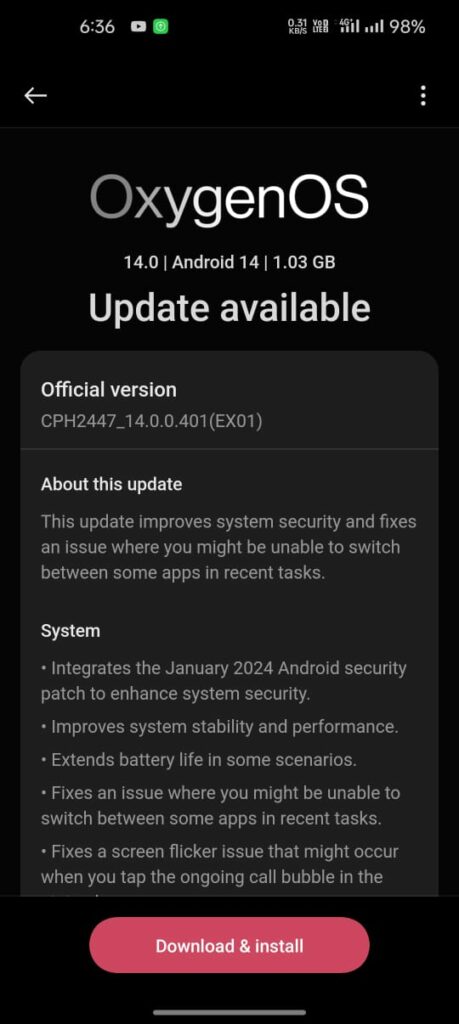
The firmware version for this update is CPH2447_14.0.0.401(EX01) and its size is 1.03 GB.
As per the changelog mentioned, they also improved the battery life for getting good battery backup, fixed an issue related to switching between apps on the recent task page, and also fixed the screen flickering issue related to touching the call bubble. Due to some unknown reasons, they removed background streaming in the smart sidebar and improved and fixed some car connection issues
Changelog:
System
- Integrates the January 2024 Android security patch to enhance system security.
- Improves system stability and performance.
- Extends battery life in some scenarios.
- Fixes an issue where you might be unable to switch between some apps in recent tasks.
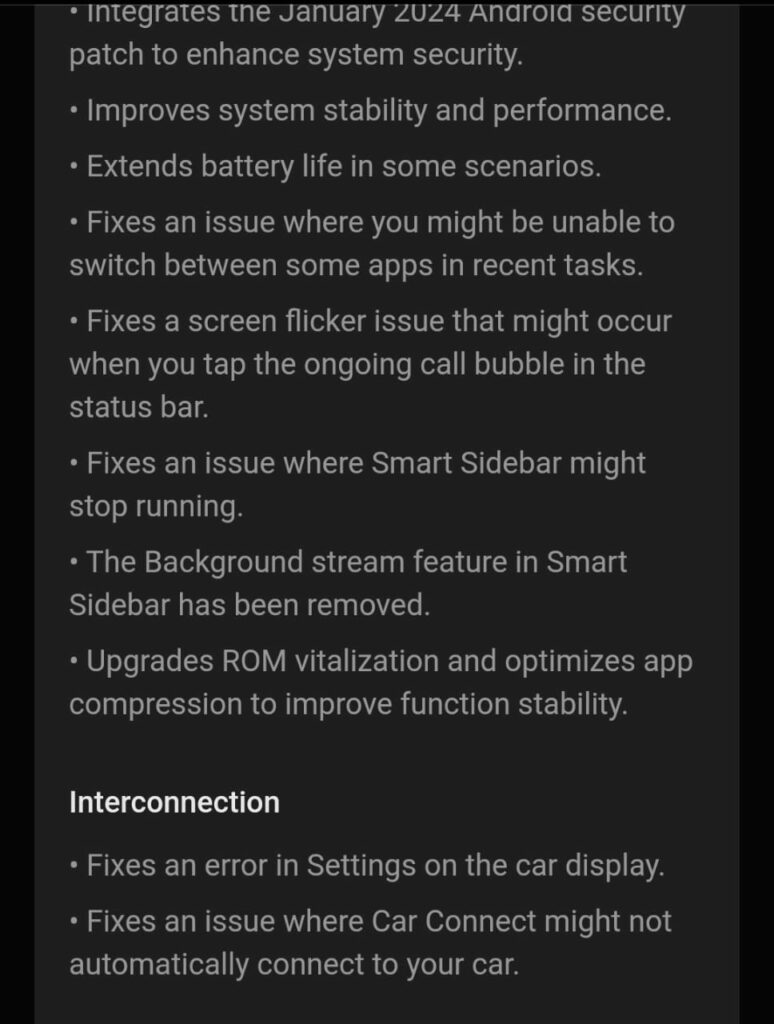
- Fixes a screen flicker issue that might occur when you tap the ongoing call bubble in the status bar.
- Fixes an issue where Smart Sidebar might stop running.
- The Background stream feature in Smart Sidebar has been removed.
- Upgrades ROM vitalization and optimizes app compression to improve function stability.
Interconnection
- Fixes an error in Settings on the car display.
- Fixes an issue where Car Connect might not automatically connect to your car.
For More Such Updates Follow Us On – Telegram, Twitter, Google News, WhatsApp and Facebook
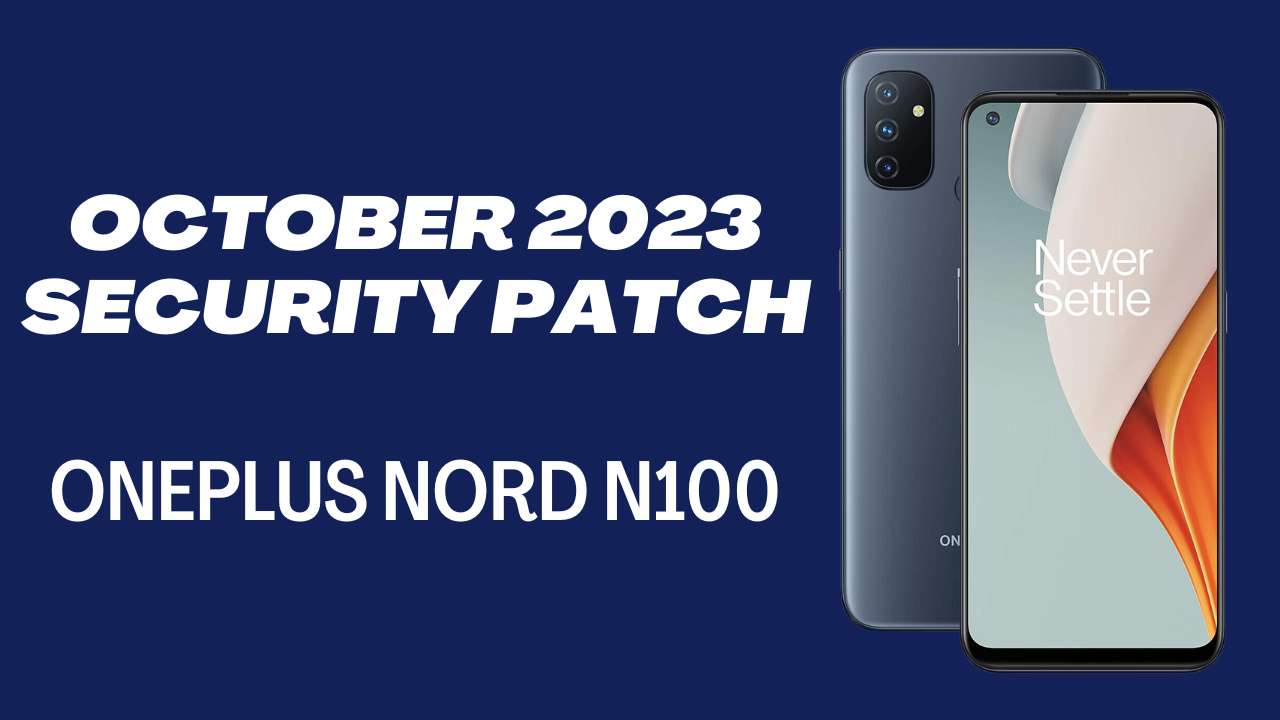
OnePlus has started the incremental rollout of the OxygenOS 11.0.15 update for OnePlus Nord N100 users in Europe and North America. It brings the latest security for this month which improves the device performance as well.
The company skipped the September 2023 security patch for the device and directly gave this update.
To identify the firmware versions in their particular regions for this update:
- EU: 11.0.15.BE83AA
- NA: 11.0.15.BE81AA
The update size is not specified for this on the community post yet. If we find any screenshots or something we will update the information here.
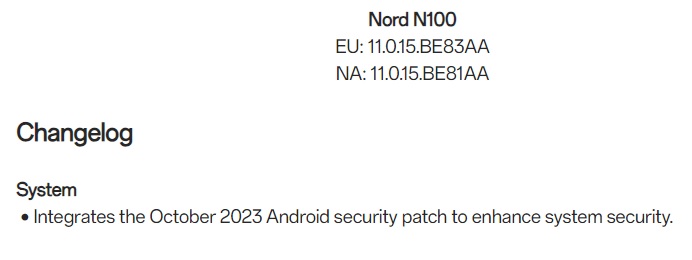
The OxygenOS 11.0.15 update only integrated the October 2023 Android security patch for the OnePlus Nord N100. It improves device security more than before and also protects from risks.
For More Such Updates Follow Us On – Telegram, Twitter, Google News, WhatsApp and Facebook
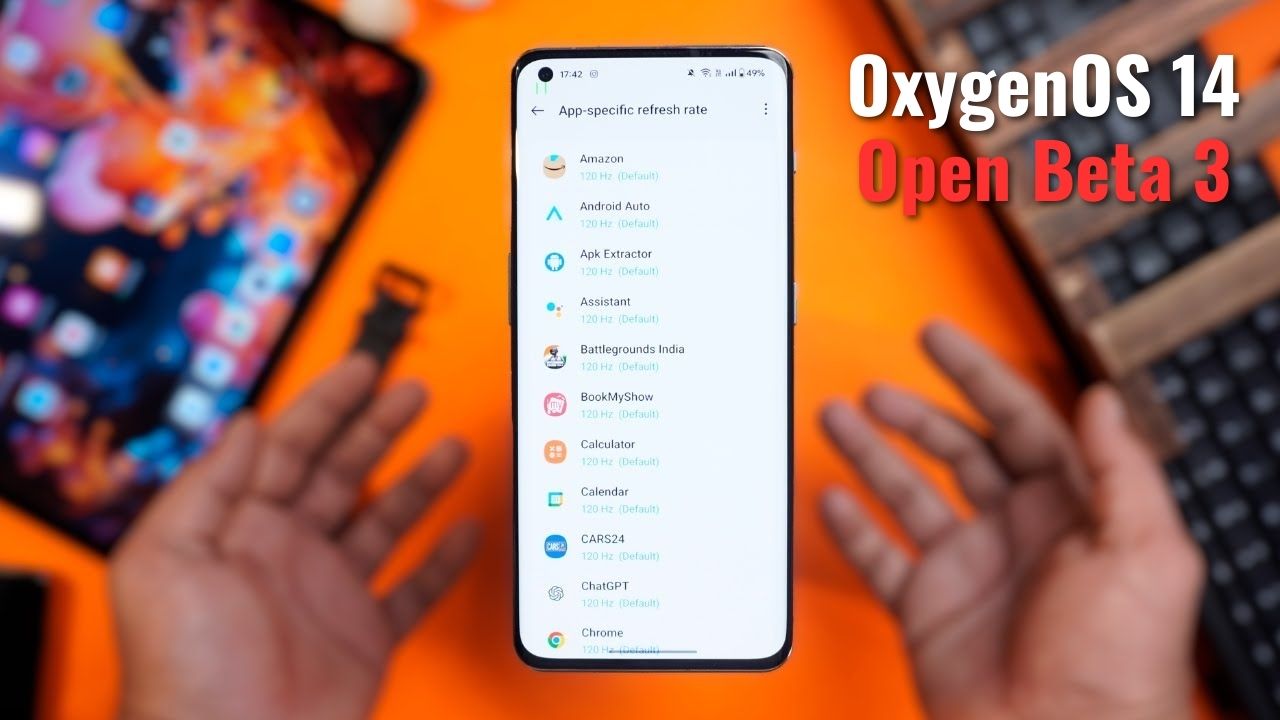
OnePlus is continuously working to enhance and improve the user experience. In a move to gather more feedback and refine the OxygenOS experience, the company has released the OxygenOS 14 Open Beta 3 for the OnePlus 11. This beta version comes packed with features that surpass its predecessors, the first and second Open Betas.
These beta updates are totally based on Android 14 and they bring lots of new features and bugs as well so be ready for everything.
However, users are reminded that beta versions might not always offer the same stability as official OTAs. Installing this update means acknowledging potential software risks. Presently, this open beta release is confined to India and North America. Those in other regions should keep an eye out for future updates.
An exclusive feature is also added to the OxygenOS 14 beta version which is not mentioned in the changelog. As per TechibeeReview our another website, you can set a custom refresh rate for particular apps or all apps at 120 Hz. This was much need feature in the smartphone as some apps were default set to 60 Hz which was not that smooth. Now if the user sets it to 120Hz for all apps then you will smooth and faster experience within the apps.
Known Issues:
- Music sound glitches with wired headphones during photo capture.
- Errors like “The system desktop has stopped running” when using third-party fonts.
- Occasional screen flashing when using the navigation bar for app switching.
- Unexpected return to desktop when swiping to close cards in Shelf.
- Dark mode incompatibility with Play Store.
- Missing incoming call notification banner on the desktop.
- “The system interface irresponsible” error on Play Store usage.
OxygenOS 14 Open Beta 3 Changelog:
System:
- Integration of October 2023 Android security patch for better security.
- System stability and performance enhancements.
- Battery life improvements in specific situations.
- Resolved display glitch affecting widgets in Dark mode.
Apps:
- Fixed issues with third-party payment apps.
- Resolved a sharing problem where photos from an album might not be sent to a chosen app.
Upgrade Instructions:
For a successful upgrade, ensure:
- Your OnePlus 11 is on the latest OxygenOS 13.1.
- Battery level is above 30%.
- At least 4 GB storage is available.
- Note: Carrier version devices from TMO/Verizon aren’t compatible with this beta.
India Users:
A new recruitment process for the Open Beta Test is now in place. Applications are open from October 12 until the quota is reached. Once you’ve applied and passed the review, the version will be available for download in Settings.
North American Users:
For those transitioning from the Stable Official version to the Open Beta, follow the given guidelines, ensuring you have the required OxygenOS 13.1 version and have backed up your data.
Rolling Back:
If you wish to revert to OxygenOS 13, the company has provided a rollback package. However, caution is advised: the rollback will erase all phone data. Hence, a backup is essential.
For detailed upgrade, installation, and rollback steps, refer to OnePlus’ official guidance.
Links:
Download the relevant files for OnePlus 11 [IN version] and [NA version] to upgrade or roll back your software.
For More Such Updates Follow Us On – Telegram, Twitter, Google News, WhatsApp and Facebook