
Google Tensor G5 Chip Likely to be Made by TSMC

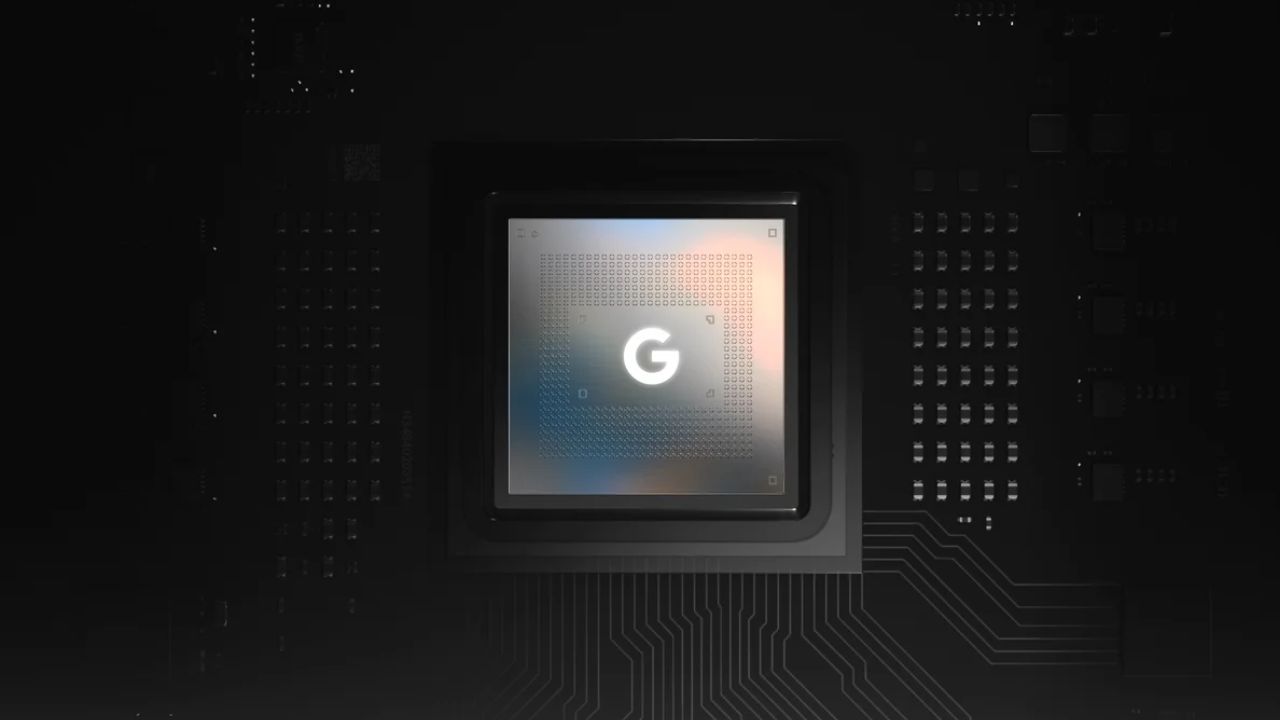
Google is making big steps in the realm of chip development. The tech giant is currently testing a self-developed Tensor chip, a project undertaken in collaboration with KYEC, a Taiwanese company. KYEC specializes in testing services for chips destined for manufacturing in Taiwan.
Reports indicate that Google is investing in equipment for testing these chips at KYEC’s facilities. Testing is set to commence around the middle of this year, with a gradual increase over time. This information comes from sources close to the matter and was first reported by 9to5Google.
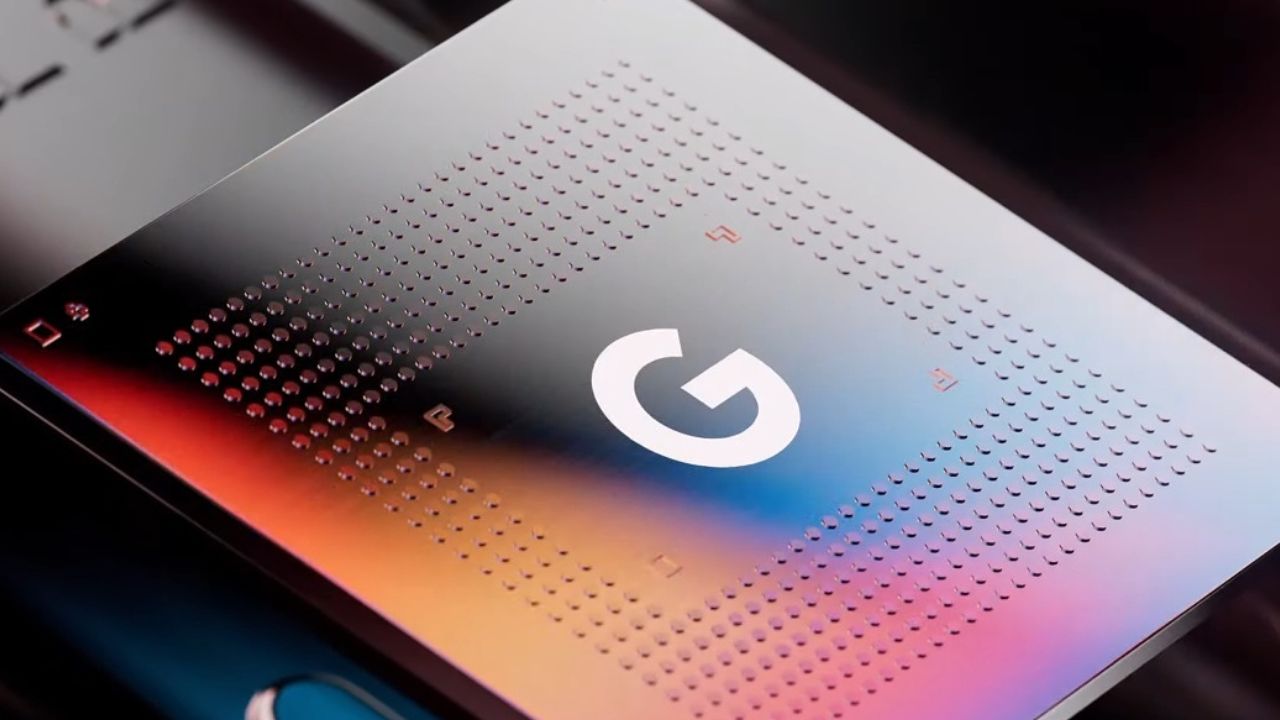
This move by Google suggests a shift from its reliance on Samsung’s processors for its Pixel phones. Sources familiar with the development believe the chip being tested is the Tensor G5, also known by its codename “Laguna.” This chip is anticipated to launch in 2025.
The Tensor G5 is expected to be manufactured using TSMC’s advanced 3nm process technology. The focus of this chip is on enhancing artificial intelligence (AI) capabilities, which aligns with Google’s emphasis on AI-powered features in its Pixel series.
This switch marks a significant milestone for Google. It represents the company’s first venture into fully custom chipset design. Up to this point, Google has been heavily dependent on the foundation provided by Samsung’s Exynos chips.
Transitioning the production to TSMC could present Google with numerous benefits. Moving away from Samsung’s Exynos chip base, which is currently trailing Qualcomm’s Snapdragon series in performance and efficiency, Google could gain more control over its chip design. This change might lead to the creation of more powerful and efficient Pixel phones in the future.
However, it’s important to note that Google’s collaboration with Samsung isn’t ending anytime soon. The Tensor G4, which is set to power the upcoming Pixel 9 series, will be manufactured using Samsung’s 4nm process. This chip is expected to offer slight improvements over the G3 found in the Pixel 8 series.
The technology used in Google’s Tensor G4 is reportedly similar to what is used in Samsung’s Exynos 2400 SoC. Therefore, we can anticipate substantial improvements in CPU and GPU performance.
For More Such Updates Follow Us On – Telegram, Twitter, Google News, WhatsApp and Facebook



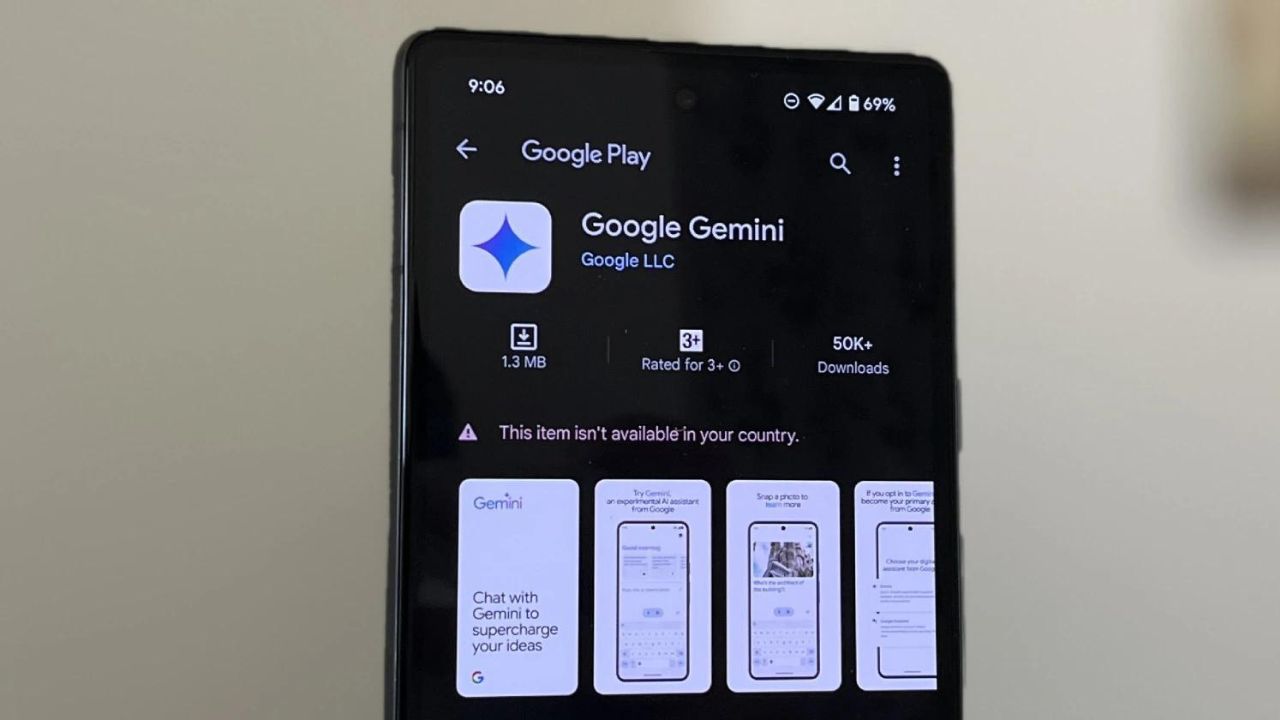
Google has recently renamed its AI Assistant to Gemini previously Bard. The Gemini app is already available in the U.S., Canada, Asia Pacific, Latin America, and Africa. This app will replace your Google Assistant as well in both Android and iOS.
Note: The Gemini app is expected to be launched in India by next week.
Some reports also suggested that Gemini’s mobile app is working on expanding availability to make it accessible on your headphones very soon. 9to5Google has recently appraised the beta version of the Google app (15.6) that contained the message which is listed below:
Gemini mobile app is working on expanding availability to make it accessible on your headphones
Few headphones have a button or a gesture from which we can activate voice assistant. Currently, it is Google Assistant, even if Gemini replaces it on the smartphone. For example, Google’s Pixel Buds Pro till now working with the old service, as indicated by its voice as well as capabilities, as per source.
Primarily, Google is focusing on launching the Gemini AI app for smartphones in all regions, especially in Europe. When Gemini expands to audio wearables, then users can expect features such as customizing the playback speed and shorter answers.
What do you guys think about the Gemini phone app? Do let us know in the comment box. Also, do let us whether you like this post or not.
Featured Image from piunikaweb.com
For More Such Updates Follow Us On – Telegram, Twitter, Google News, WhatsApp and Facebook
In 2020, Google released its Reading Mode app, and now the company has made the Reading Mode app plenty useful. With this new update, the Reading Mode app will also work in Gmail, X (formerly Twitter), and Threads along with other social media and email apps as well.
If we talk about what this app can do, then this app makes every page text easy, so that you can easily read that along with this it also turns each viewed page into plain text. As mentioned above, this new update brings Reading Mode app support to Gmail, X, Threads, and other email and social media apps which is a good and useful thing.
Furthermore, if you are on the go, then the app can also read the text aloud. So, that you can listen to it. Still, the developers have to note that the app may not work properly with all social media and email apps. However, it might work with all social media and email apps in the future.
Do you guys use this Reading Mode app? Do let us know in the comment box. Also, do tell us whether you like this post or not.
For More Such Updates Follow Us On – Telegram, Twitter, Google News, WhatsApp and Facebook
Sundar Pichai, CEO of Google and Alphabet has posted a thread on their X account. In that thread, Pichai mentioned that Google One (a subscription from Google) has crossed 100 Million Subscribers, and Google will be obsessing about” building on that momentum” along with the newly launched AI Premium Plan.
Features you get after subscribing to Google One AI Premium Plan
This new AI Premium Plan will offer AI features that are powered by recently powered Google’s AI Model (Gemini), which was previously (Bard). If we talk about what this plan will offer, then this Google One AI Premium Plan will feature Gemini Advanced.
This Gemini is also coming to Gmail, Google Docs, and other Google apps as well very soon. Moreover, this plan will offer 2TB of storage, 10% back from the Google Store, More Google Meet features such as longer group video calls (the limit without a subscription is one hour), and More Google Calendar features like enhanced appointment scheduling.
Pricing of Google One AI Premium Plan
Later on, if we talking the pricing of the AI Premium Plan, then this Google One AI Premium Plan is priced at Rs. 1,950/ $23.49 for a month. On the other hand, the other Google One plans i.e. Basic, Standard cost Rs.130/ $1.57, Rs.650, $7.83. You can learn more about Google One Plans by clicking here.
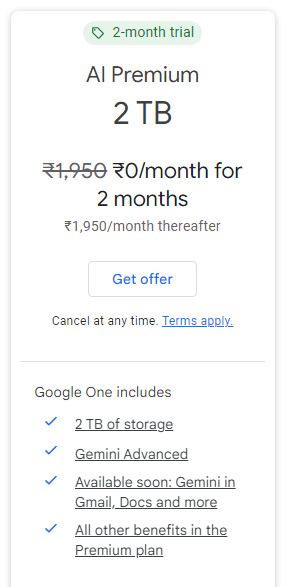
Note: Currently, Google One AI Premium is available free for 2 months.
Do you guys purchase this new Google One AI Premium Plan? Do let us know in the comment box. Also, tell us whether you like this post or not.
For More Such Updates Follow Us On – Telegram, Twitter, Google News, WhatsApp and Facebook