Connect with us

Android

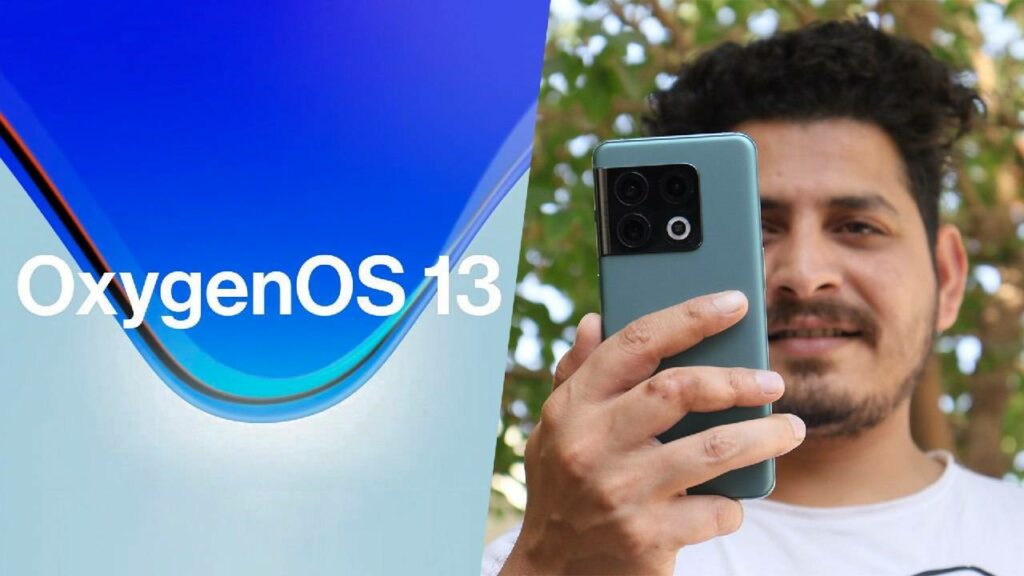
OxygenOS 13 Open Beta 2 Released For OnePlus 10Pro Users with More Fixes and Changes- Download Here

Published

on

20220816 082700

OxygenOS 13 OpenBeta 2 for OnePlus 10 Pro.

OxygenOS 13 Open Beta (OB) 2 for the OnePlus 10 Pro is now available! Compared with the first OB , we have more functional features that we believe you will be interested in experiencing. If you want to know more about OxygenOS 13, Refer to This Video 

In order to upgrade this build successfully, be sure that your device is in the latest OxygenOS 12 version (A.15 or A.16). Please know that the current Open Beta 1 users will receive this build gradually.

Please bear in mind that this is beta software and, as such, may be less stable than our MP builds. If you are installing this build, we highly recommend you make a full system backup before proceeding.

Known Issues

  1. RCC cannot work normally in this build.
  2. The carrier version (Zain) in Kuwait is unable to send MMS.
  3. The carrier version (Telecom) in North Macedonia is unable to send IMS.
  4. There is no response when clicking Capture log after switching Multiple users/System cloner/Languages. (You need to switch Multiple users/System cloner/Languages first before capturing the log in the feedback tool.
  5. A dot will display abnormally when pairing Bluetooth.
  6. The photos might be blurred when taking multiple pictures of people with Ultra Dark mode and zoom out at the same time.
  7. The screen will freeze when taking videos in specific scenarios.
  8. The pictures might be black when taking photos in the dark with Night mode.
  9. A dot displays abnormally in the status bar. 

Changelog

Note: Please be aware that some changelogs here only suit specific regions.

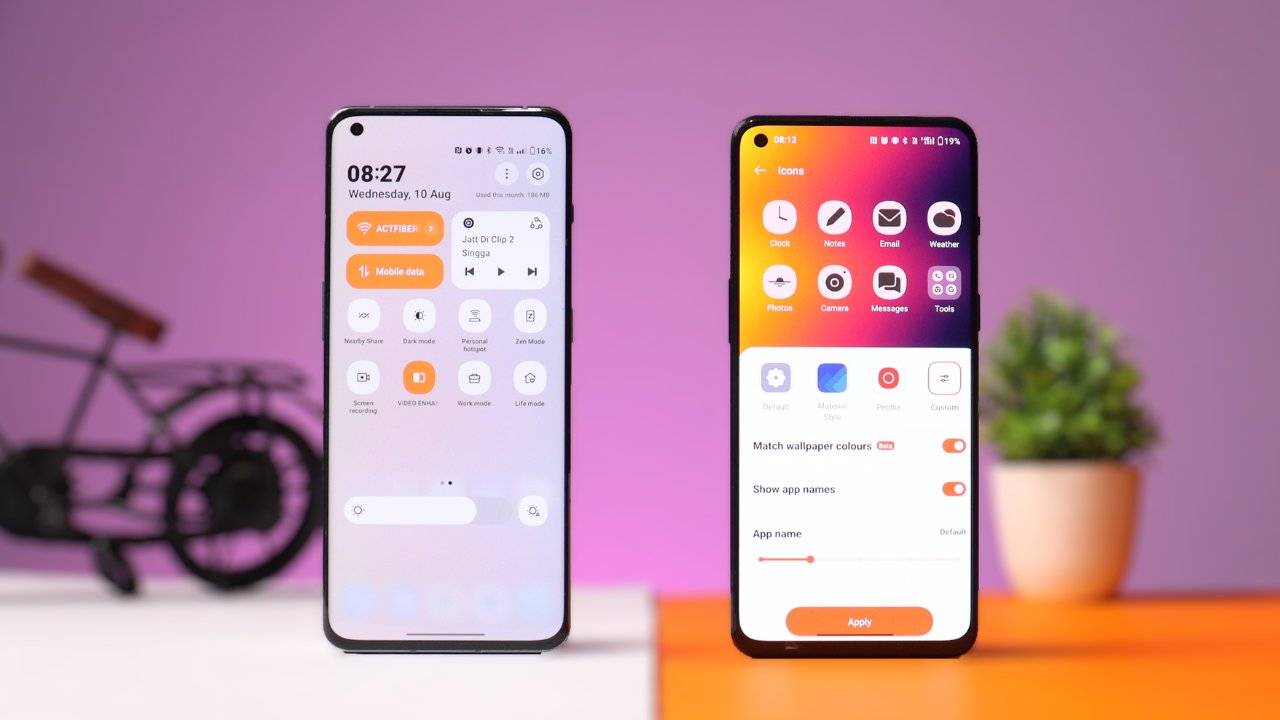
Aquamorphic Design

  • Adds Aquamorphic Design theme colors for enhanced visual comfort.
  • Applies the Aquamorphic Design philosophy to animations to make them natural and vivid.
  • Adds a Home screen world clock widget to show the time in different time zones.
  • Upgrades to Quantum Animation Engine 4.0, with a new behavior recognition feature, which recognizes complex gestures and provides optimized interactions.
  • Applies real-world physical motions to animations to make them look more natural and intuitive.
  • Optimizes fonts for better readability.
  • Enriches and optimizes illustrations for features by incorporating multicultural and inclusive elements.

Efficiency

  • Adds Meeting Assistant to enhance the meeting connection and introduces an option to make notifications more subtle and less distracting.
  • Adds large folders to the Home screen. You can now open an app in an enlarged folder with just one tap and turn pages in the folder with a swipe.
  • Adds media playback control, and optimizes the Quick Settings experience.
  • Adds more markup tools for screenshot editing.
  • Optimizes Shelf. Swiping down on the Home screen will bring up the Shelf by default. You can search content online and on your device.

Seamless interconnection

  • Optimizes earphone connectivity to deliver a more seamless experience. 

Personalization

  • Optimizes Bitmoji to offer more Always-On Display animations.
  • Optimizes Insight Always-On Display, with more personalized Always-On Display settings available.
  • Optimizes Canvas Always-On Display, with more drawing tools and line colors available.

Security & privacy

  •  Adds an automatic pixelation feature for screenshots of chats. The system can identify and automatically pixelate profile pictures and display names in a chat screenshot to protect your privacy.
  • Adds regular clearing of clipboard data for privacy protection.
  • Optimizes Private Safe. The Advanced Encryption Standard (AES) is used to encrypt all files for enhanced security of private files.

Health & Digital wellbeing

  • Adds Kid Space, providing screen time limit, ambient light reminders, and Eye-protecting display features.

Performance optimization

  • Adds Dynamic Computing Engine to improve the system speed, stability, battery life, and app experience.
  • Optimizes Dolby Sound effects with enhanced spatial sound field perception and more accurate sound sourcing.

Gaming experience

  •  Upgrades to HyperBoost GPA 4.0 to stabilize the frame rate and balance the performance and power consumption in key scenarios.

System

  • Improves system stability for some scenarios.
  • Fixes an issue where icons would sometimes overlap in Quick Settings.
  • Fixes an issue where a panel might be automatically pulled down from the status bar in some cases.
  • Fixes an issue that might cause auto brightness to respond slowly.
  • Fixes an occasional flicker issue that might occur when your device screen is turned off or on.
  • Fixes an issue where the Quick Settings background might appear transparent.
  • Fixes an issue where you might be unable to wake your screen by double-tapping it in Guest mode.
  • Fixes an issue where your screen might be slow to wake when the Power button is pressed.
  • Fixes an issue where the “Other” category might take up a huge portion of your device storage.

Camera

  • Fixes an issue where the Camera would lag.

OxygenOS 13 OpenBeta 2 for OnePlus 10 Pro

Download OxygenOS 13 OpenBeta 2 

Please note:

  1. These instructions are only for the OnePlus 10 Pro. Please make sure the battery level is above 30% and a minimum of 5GB of storage space is available.
  2. Carrier version devices (TMO) aren’t compatible with the Open beta builds.

Process of INSTALLING 

 (IN&EU ONLY)

Note: This upgrade method only works for the IN&EU version, NA users please refer to the upgrade guide below.

Note: In order to upgrade this build successfully, be sure that your device is in the latest OxygenOS 12 version (A.15 or A.16). The current Open Beta 1 users will receive this build push gradually.

  1. Download the latest ROM upgrade zip package from the specified server.
  2. Copy the ROM upgrade package to the phone storage.
  3. Go to Settings -> About device -> Version -> Click Build number 7 times and enter the password, now you are in the developer mode.
  4. Go back to Settings -> About device -> Up to date -> Click the top right button -> Local install -> Click on the corresponding installation package -> Extract -> Upgrade -> System upgrade completed to 100%.
  5. After the upgrade is complete, click Restart.
  6. Update successful.

Installation Process for NA

Note: This upgrade method only works for the NA version, IN&EU users please refer to the upgrade guide above.

Note: In order to upgrade this build successfully, be sure that your device is in the latest OxygenOS 12 version (A.15 or A.16). The current Open Beta 1 users will receive this build push gradually.

  1. Download the latest ROM upgrade zip package from the specified server.
  2. Copy the Upgrade package to the phone storage.
  3. Install this  apk . You’ll need it to update. Then, open the app -> tap the top-right gear icon -> find the upgrade package and tap it -> wait to finish the installation -> tap reboot
  4. After the upgrade is complete, click Restart.
  5. Update successful.

Source – Oneplus Community 

If you like our article then follow us on Google news, and Instagram, or join our Telegram GroupFor the latest TechNews and Reviews, follow Techibee on Twitter and Facebook, and subscribe to our Youtube channel

Ashok Mor (also known as TechiBee) owns a YouTube channel named TechiBee. He has been providing various tips, tricks and latest tech videos in the world of smartphones.

Android

Google Introduces Android Bench: New Benchmark Ranks Best AI Models for Android App Development

Published

on

Illustration representing Google Android Bench benchmark evaluating AI models for Android app development.

What is Android Bench and Why Google Created It

Android Bench is a newly introduced benchmark developed by Google to evaluate how effectively artificial intelligence models can assist in Android app development. The tool is designed to measure the real-world performance of AI coding models by testing their ability to complete practical Android development tasks. With AI becoming increasingly integrated into software development workflows, benchmarks like Android Bench aim to provide developers with a clearer understanding of which models perform best.

Google created Android Bench to simulate realistic development scenarios rather than simple coding challenges. The benchmark focuses on tasks commonly encountered by Android developers, including working with Jetpack Compose, implementing application architecture, handling asynchronous operations with coroutines, and managing UI logic. By evaluating AI models in these real-world conditions, the benchmark provides a more accurate representation of how useful they are for developers.

According to the benchmark results, several leading AI models have already been evaluated. Google’s Gemini 3.1 Pro currently ranks at the top of the leaderboard, demonstrating strong performance in generating Android-specific code and solving complex development problems. Other high-performing models include Claude Opus 4.6, GPT-5.2 Codex, Opus 4.5, and Gemini 3 Pro. These models were tested on their ability to generate functional code, follow Android development best practices, and solve structured programming challenges.

The introduction of Android Bench highlights the growing competition among AI companies to create models that can assist developers more effectively. As AI coding assistants become more common in integrated development environments, benchmarks like this help developers choose tools that can reliably speed up development while maintaining code quality.

Another important aspect of Android Bench is its focus on practical evaluation. Instead of simply checking whether a model can generate code snippets, the benchmark analyzes whether the generated code actually works in a realistic Android project environment. This ensures that the rankings reflect real usability rather than theoretical capabilities.

As AI continues to transform the software development landscape, tools like Android Bench could become essential for measuring progress in AI-assisted programming. By providing transparent rankings and standardized testing conditions, Google’s benchmark may influence how developers and companies evaluate AI coding tools in the future.

Also Read: OnePlus 15s vs OnePlus 13s: Expected Upgrades in Processor, Battery, and Camera for the Next Compact Flagship

Continue Reading

OnePlus

OnePlus 15s vs OnePlus 13s: Expected Upgrades in Processor, Battery, and Camera for the Next Compact Flagship

Published

on

OnePlus 15s smartphone design comparison showing compact flagship with dual camera module and new green color variant.

OnePlus 15s vs OnePlus 13s: What Upgrades to Expect

OnePlus 15s vs OnePlus 13s is already becoming a trending discussion among smartphone enthusiasts as leaks suggest that OnePlus is preparing a powerful compact flagship upgrade. The upcoming OnePlus 15s is expected to arrive as the successor to the OnePlus 13s, bringing improvements in performance, battery capacity, camera technology, and durability while maintaining a compact design.

Industry reports suggest that the OnePlus 15s could launch with the latest Snapdragon flagship chipset, making it significantly faster and more efficient than its predecessor.

Performance and Display Improvements

The OnePlus 15s is rumored to feature the next-generation Snapdragon flagship processor, which could offer noticeable improvements in speed, gaming performance, and power efficiency. This upgrade is expected to make multitasking smoother and deliver better thermal management during intensive tasks.

In terms of display, the device may retain a compact screen size of around 6.3 inches with a 1.5K resolution and a 120Hz refresh rate. This combination should provide a sharp viewing experience along with fluid scrolling and gaming performance.

Larger Battery and Faster Charging

Battery life could be one of the most notable upgrades in the OnePlus 15s. Reports indicate that the device might feature a battery capacity of up to 7,500mAh, which would be significantly larger than the battery found in the OnePlus 13s.

The smartphone is also expected to support fast charging technology, possibly around 100W wired charging. This combination could provide longer usage times and faster top-ups, which is especially useful for heavy smartphone users.

Camera and Durability Enhancements

The camera system on the OnePlus 15s may also receive improvements. Leaks suggest the inclusion of a 50MP periscope telephoto camera capable of delivering enhanced optical zoom and better long-distance photography.

Additionally, the device could come with improved durability features such as IP68 or IP69 water and dust resistance, making it more reliable for everyday usage.

Expected Launch Timeline

Although OnePlus has not officially confirmed the device yet, industry insiders suggest that the OnePlus 15s may debut after the Chinese launch of its counterpart model. If the rumors prove accurate, the smartphone could become one of the most powerful compact flagship devices available.

With improved performance, a massive battery upgrade, and enhanced camera capabilities, the OnePlus 15s is shaping up to be a significant step forward from the OnePlus 13s.

Source: https: Gizbot

Also Read: Google Play Store Battery Drain Warning: Android Will Soon Alert Users About Power-Hungry Apps

Continue Reading

Google

Google Play Store Battery Drain Warning: Android Will Soon Alert Users About Power-Hungry Apps

Published

on

Google Play Store app icon displayed on an Android smartphone screen alongside Facebook and Galaxy Store icons.

Google Play Store Battery Drain Warning Explained

Google Play Store battery drain warning is a new feature being developed by Google that will alert users before installing apps that may consume excessive battery power. The update is designed to help Android users avoid apps that run heavy background processes and negatively impact device battery life.

According to recent reports, Google plans to introduce warning labels on the Play Store listing page when an app is detected to use significantly more battery than expected. This feature will rely on data collected through Android’s performance monitoring system to determine whether an app is draining power inefficiently.

depositphotos 64742243 stock photo google play logo on google

The goal of this change is to improve transparency in the Play Store ecosystem while encouraging developers to optimize their apps for better battery efficiency.

How Google Detects Battery-Draining Apps

Google will use Android’s internal metric known as Excessive Partial Wake Locks to evaluate how frequently an app keeps the device awake in the background. When apps trigger this condition too often, it indicates that they are consuming power unnecessarily.

Apps that exceed the defined threshold in a notable percentage of user sessions may receive a warning label in the Play Store. The alert will inform users that the application may use more battery than expected compared with similar apps.

This system is expected to rely on aggregated performance data collected from Android devices, ensuring that warnings are based on real-world usage rather than isolated testing.

What It Means for Android Users and Developers

For users, the new Play Store warning system could make it easier to avoid installing poorly optimized applications. Battery performance is one of the most common concerns among smartphone users, and identifying problematic apps before installation may significantly improve daily device usage.

For developers, the feature introduces stronger incentives to optimize background processes, reduce unnecessary wake locks, and improve app efficiency. Applications that trigger battery drain warnings may also lose visibility in recommendations or rankings within the Play Store.

Overall, this upcoming feature reflects Google’s broader effort to improve Android performance, transparency, and user experience. By highlighting battery-intensive apps directly in the Play Store, Android users will gain better control over the apps they install and the impact those apps have on their device’s battery life.

Source: Phonearena

Also Read: iOS 26.4 Beta 3 Released: Apple Rolls Out Revised Developer Build With New Apple Music and Security Updates

Continue Reading